
Glenwood Canyon, Colorado: sheer tan sandstone walls rising above green pines under a clear blue sky

Colorado-based · fully remote

Glenwood Springs web design that fills your calendar, not just your homepage

We do Glenwood Springs web design for lodges, outfitters, restaurants and spas, with one job in mind: more bookings and calls from your own site. We build it so visitors find you on Google and, once they land, book or call.

5.0 on Google Builds $5k–$40k Fixed quote in writing

See two sites we built in Ouray

Where the booking happens

Most of your customers decide before they reach town

The choice gets made on a phone, somewhere else. In a hotel room the night before. At a gas station off I-70. Still at home, with the trip half planned.

They open three tabs, yours and two places like yours, and book the one that answers fastest.

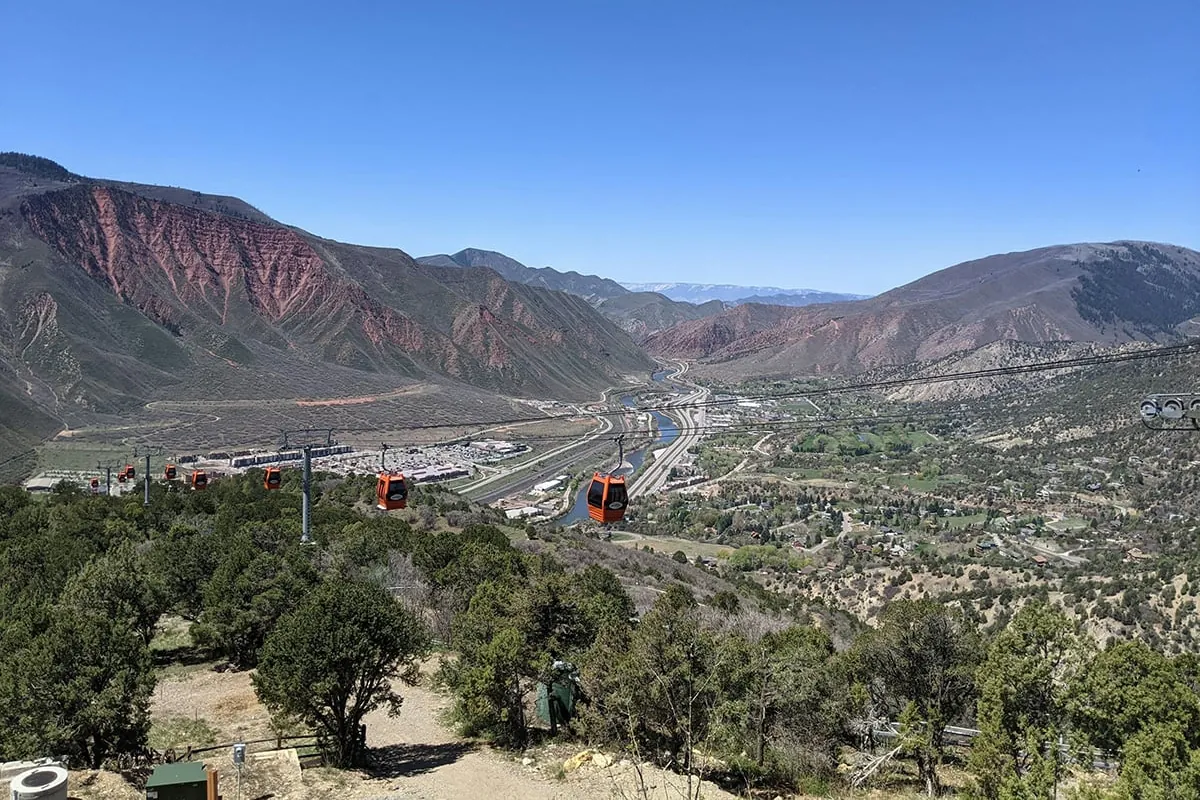
Orange Glenwood Caverns gondola cars above the town, with the river and I-70 running through the valley below
From the Caverns gondola: the town, the river and I-70, the way your visitors come in
  1. Are you open?

    What they need to see
    Today's hours, or the dates you have open, on the first screen
    What an older site makes them hunt for
    Hours on a contact page three taps in, still showing last season
  2. What does it cost?

    What they need to see
    Rates or a starting price, right next to the room, trip or table
    What an older site makes them hunt for
    Prices in a PDF, or a line that says to call for rates
  3. How do I book?

    What they need to see
    One button to book and one tap to call, wherever they are on the page
    What an older site makes them hunt for
    A contact form and a promise that someone will get back to them

Anyone who has to hunt closes your tab. They don't cancel the trip. They book with the next business on the list, and that's the moment your website makes you money or costs you some.

How a website earns

Found first, picked second: where a website's money comes from

Every booking your site brings in walks the same path. Someone searches on a phone. First they have to find you. Then they have to pick you. Your website decides how wide each of those two gates opens.

More people find you × more of them book = more money
  1. Found

    More people find you

    Someone looks up a room, a rafting trip or a table for six. If Google shows them your site, they're through the first gate. Show up for more of those searches and more people reach you.

  2. Picked

    More of them book

    Once they land, they want to see that you're open, what it costs and how to book. Make that quick and more of the people who arrive book or call, instead of going back to the other tabs.

  3. Both

    The two multiply

    What reaches Booked is both gates at once. A site nobody finds stays quiet, however good it looks. A site that's easy to find but hard to book sends people down the street. Open both and each one makes the other worth more.

Which gate is narrow on your site right now? That's the first thing we look at on a .

Built in, not added later

Built to book from the first day it's live

Good Glenwood Springs web design comes down to a short list of plain things, done on every page. On a site we build, all of them are in place the day it goes live, not saved for a phase two.

What a visitor sees

So they pick you

  • Open, price and how to book

    All three answered on the first screen, before anyone scrolls.

  • One tap to call or book

    From any screen, with no form to fill in before they can reach you.

  • Your reviews next to the button

    Your Google stars sit where the decision gets made, not on a page nobody opens.

  • Directions and parking a thumb away

    The address, a map link and where to park, for people already on the road.

What Google reads

So they find you

  • A page for each thing people search for

    Each trip, each room, each service gets its own page, so every search has a place to land.

  • Clean headings

    Every page says plainly what it's about, so Google can match it to the search.

  • Fast on a phone

    Light pages that open quickly on a phone signal, without a spinning wheel first.

  • Hours and location Google can read

    Written into the page in a format Google understands, so it gets them straight from your site.

  • Search Console set up at launch

    Google's own tool for seeing which searches bring people to you, connected the day you go live.

All nine, on launch day

After that, you change hours, rates and the menu yourself. No call to us needed.

Real sites, a town like yours

Two sites we built in Ouray, another hot-springs town

To be plain: both businesses are in Ouray, not Glenwood. Ouray is a smaller hot-springs town that lives on visitors too, so the job was the one you'd hand us. Get found by people planning a trip, then get them to book or walk in. One of them is a guide service, and it's the work behind our page on websites for outfitters and tour companies.

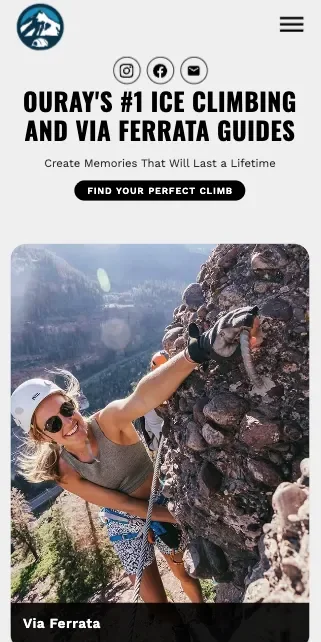
Basecamp Ouray Climbing guides
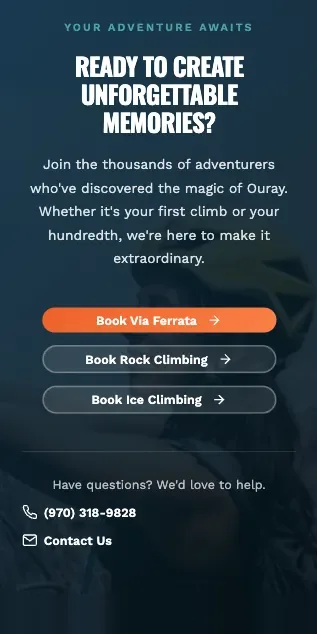
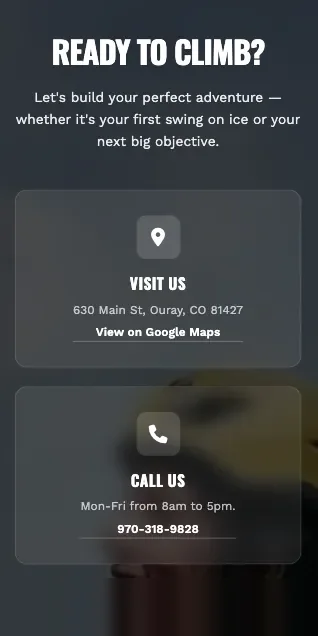
Basecamp Ouray home screen on a phone: Ouray's #1 ice climbing and via ferrata guides, and a Find your perfect climb buttonBasecamp Ouray screen with Book Via Ferrata, Book Rock Climbing and Book Ice Climbing buttons above the phone numberBasecamp Ouray contact screen: the address with a Google Maps link, then office hours and a tap-to-call number
Cahoots Tavern Main Street bar
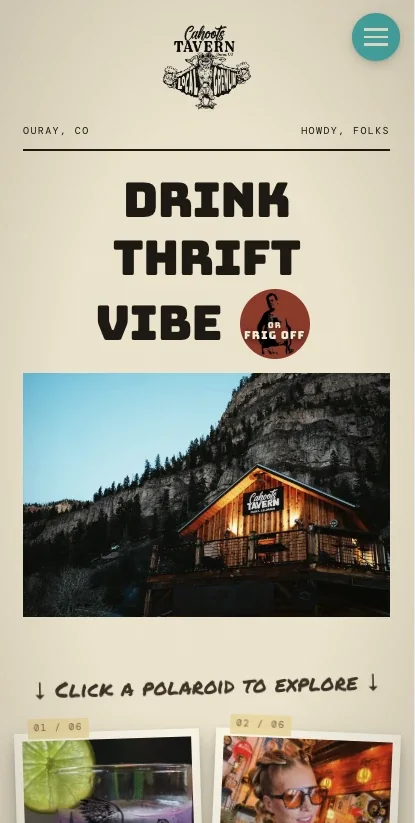
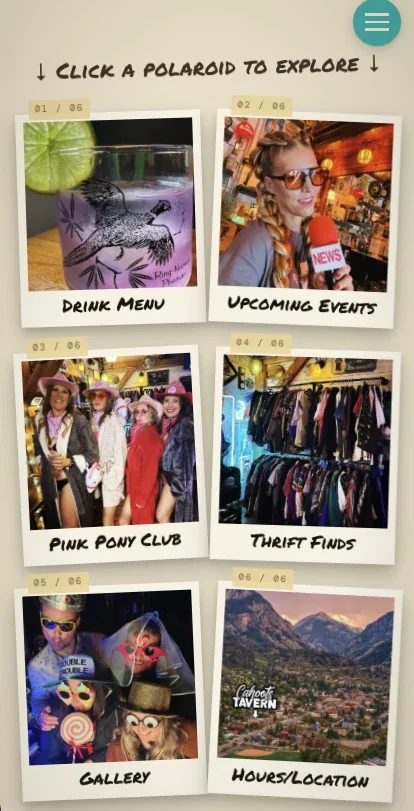
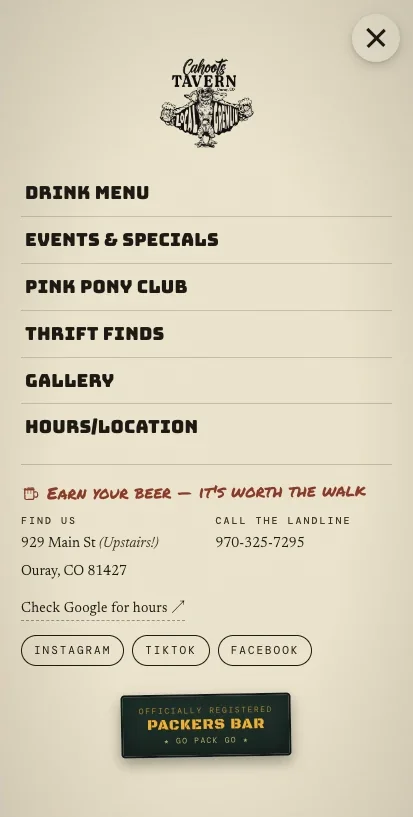
Cahoots Tavern home screen on a phone: Drink Thrift Vibe headline above a photo of the tavern lit up at duskCahoots Tavern screen of polaroid photo links to the drink menu, upcoming events, gallery and hours and locationCahoots Tavern site navigation open on a phone: drink menu, events, hours and location, the address and landline
  1. Screen 1 of 3

    The first screen says what it is

    Basecamp: who they are in one line, and one button to find a climb.

    Cahoots: its name, its town and the tavern itself, lit up at dusk.

  2. Screen 2 of 3

    One tap to what they came for

    Basecamp: a booking button for each kind of trip, the phone number right under them.

    Cahoots: photos that open the drink menu, events, gallery and hours.

  3. Screen 3 of 3

    The way in, a thumb away

    Basecamp: the address with a map link, office hours and a number you tap to call.

    Cahoots: the site's menu, with drinks, events, hours, the address and the landline.

Keep scrolling: both phones scroll with you. Scroll or swipe inside each phone to see all three screens.

Guided climbing · Ouray

Basecamp Ouray

Ice, rock and via ferrata trips. Bookings used to happen over the phone, not on the site, and the old site didn't lead with their reviews. We laid booking out on one page around the four steps a first-timer takes: choose, book, gear up, climb.

five-star Google reviews, moved next to the booking button
540+
pages, with each adventure on its own
12
on Google's mobile speed test (Lighthouse)
99/100
Read the Basecamp Ouray case study

Bar · Main Street, Ouray

Cahoots Tavern

An eclectic bar that tourists look up on the way into town. Their Squarespace site didn't carry the place through, so we swapped it for a small custom site built around what road-trippers check: the menu, hours, events and directions.

from first idea to a live site
18 days
on the same mobile speed test
99/100
each page comes in under that, so it opens fast on a phone
250 KB
Read the Cahoots Tavern case study

Different town, same job. Tell us about your place and we'll tell you plainly what we'd build for it.

Why it stays fast

Nothing to patch in July

Your busiest month is the worst time for your website to need you. So we build it with nothing underneath that needs looking after.

WordPress is a capable, popular way to build a site, and it can do almost anything. It gets there in layers: a theme, a page builder, and a plugin for each extra job. Every layer has its own updates to keep up with, and every update is a chance for something else to stop working.

We build in Astro instead. Each page goes out as a plain, finished page carrying only the code that page needs. There's no plugin stack, no theme to update and no page builder adding weight.

Plain pages open quickly on a phone with a weak signal, and Google reads them easily. With nothing piling up underneath, they stay that way through the busy months and the slow ones.

The speed comes from how it's built, so it doesn't depend on the business

Two of these you've met above. Five very different businesses, each scored out of 100 on Google's mobile speed test, as published in its case study.

Wondering what it would take to move the site you have now? Ask us on a .

Who you'd be working with

The two people who'd build it

Bullfinch is a two-person web studio. If we build your site, these are the two people you deal with from the first call to launch day, with nobody else behind them.

Kyle, who designs and builds Bullfinch websites, behind his laptop in a brick-walled workspace

Kyle

Designs and builds your site

Kyle designs every page and writes the code behind it. He also runs Google Ads and sets up automations when a job calls for them, and he's been making websites since he was 14.

Katie, who runs Bullfinch projects and client accounts, at her laptop in a sunlit brick loft

Katie

Runs your project and your account

Katie sets the schedule and the timeline for your project and keeps every piece of it moving. You won't have to chase anyone for an update.

  • No handoffs

    No account managers, and no junior staff taking over halfway. The person on your first call is the person building your site.

  • Not down the street

    We're Colorado-based and fully remote, and we won't pretend to be local. Calls are on Google Meet, and you click through your new site on a preview link whenever it suits you.

  • On your clock

    We work on Mountain Time, same as Glenwood, so booking a call never means doing time-zone math.

The quickest way to tell if we're the right two for your place is to talk to us.

Price and timing

What it costs, and when it can be ready

Most owners want two answers before anything else: what it costs, and whether the build gets in the way of your busy season. Here are both, up front.

What a build costs

$5,000 to $40,000

That range covers the web design Glenwood Springs businesses actually need, from a menu-and-hours site to one with a page for every trip. Where your site lands in it comes down to three things.

  • How many pages

    A site with a menu, hours and directions costs less than one with a page for every trip, room and service.

  • What it connects to

    Hooking in your booking system, taking payments, or sending forms into the tools you already use.

  • Search or ads with it

    Whether SEO or Google Ads come along with the build, or the site goes out on its own.

From first call to launch, in four steps

  1. A 30-minute call

    We talk through your business, the site you have now and the dates that suit you.

  2. A fixed quote, in writing, within a week

    The scope and the price on paper, so you know the number before any work starts.

  3. The build, on a preview link

    You click through the new site on your own phone as it comes together, and tell us what to change.

  4. Launch, with tracking on

    It goes live with tracking and Google Search Console set up, so you can see who's finding it from the first day.

How long it takes

  • Most builds60 to 90 days

  • Under ten pagesFour to six weeks

  • Cahoots Tavern, shown above18 days

Your busy months stay yours

Most owners build between busy months, so the work happens while things are quieter and the site is ready before the next rush. We set the dates together on the .

Before you book

A few honest answers

Five things you might still be wondering, each with the short answer up front. Open any of them for the rest.

  1. You're not in Glenwood. Does that matter? No.

    Not for the result. What brings in bookings is how the site is built, not where the person building it sits. We work from elsewhere in Colorado, so instead of meeting a web designer in Glenwood Springs over coffee, you talk to us on a video call and click through your new site on your own phone as it comes together.

  2. Can I change hours, rates and the menu myself? Yes.

    You edit the words on your pages yourself: this week's hours, next season's rates, a new dish on the menu. You can add new pages too, say for a trip you've just started running. None of it means a call to us.

  3. Can you move us off Squarespace, Wix or WordPress? Yes.

    We move your site over page by page, and every old address gets a redirect to its new page. Old links and Google results still land in the right place, so Google keeps what your site has already earned.

  4. Who owns the site once it's built? You do.

    You own the domain, the code and the hosting accounts. If you ever decide to work with someone else, the whole site goes with you.

  5. Do you do search and ads too, or just the website? Both.

    We do both, so you don't need one web developer in Glenwood Springs for the site and another firm for Google. SEO for Glenwood businesses and Google Ads can come with the build or start later, and the people who built your site do the work.

Something else on your mind? Ask it on a .

Your next step

Talk through your Glenwood website in 30 minutes

Glenwood Springs web design only pays if the site brings in more than it costs. So the call is about money: you and the person who'd build your site, looking at what it earns you now and what it could.

  • Now

    What your site brings in today, and where bookings and calls slip away.

  • Could

    What it could bring in, with more people finding you on Google and more of them booking.

  • In writing

    A fixed quote within a week, so you decide with the real number in front of you.

Rather pick up the phone? 720-299-8584

Pick a day, then a time

Loading availability