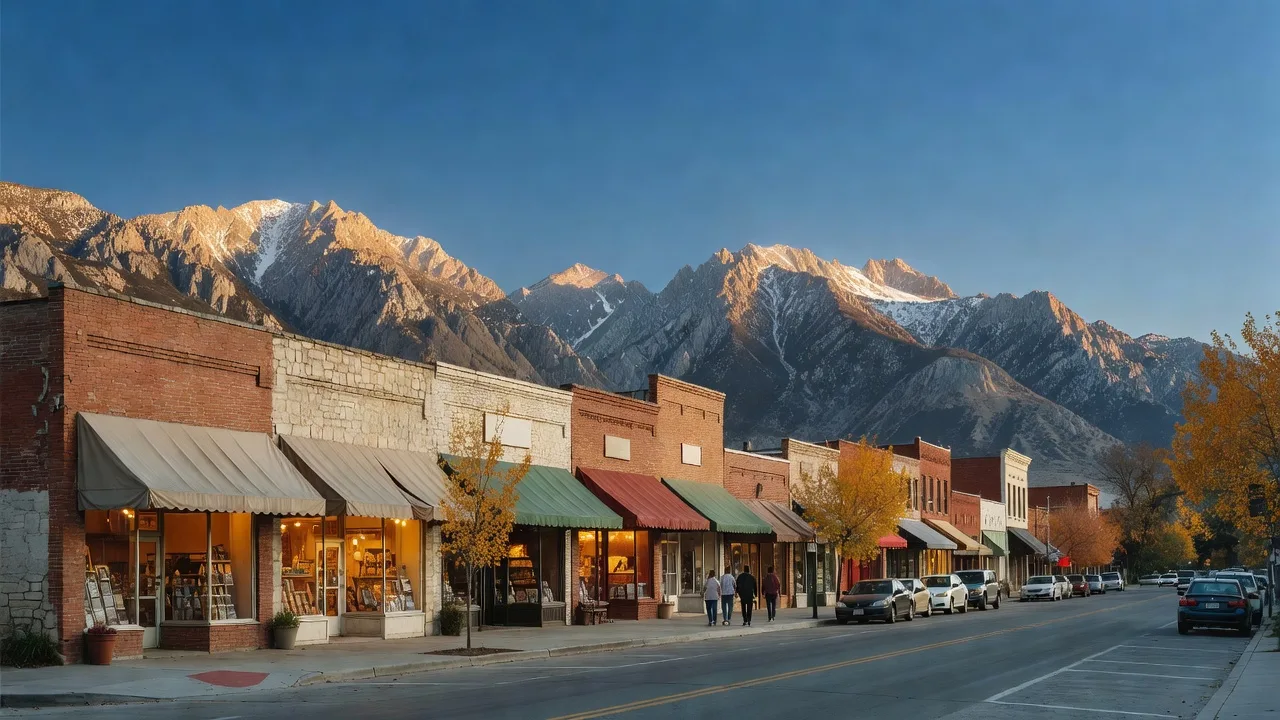
Brick storefronts with lit windows and awnings below the Wasatch peaks in late-afternoon sun

For shops, practices and trades across Utah County

Provo web design that brings more of Utah Valley to your door.

Plenty of Provo web design stops at looking good. Your business gets a fast, custom site built to earn: more people from Lehi to Spanish Fork find it on Google, and more of those who land on it call, book or walk in.

5.0 on Google A fixed price, written down, within a week of the call

Where the work slips away

What a website that looks fine is costing you

Your website is never just sitting there. It is either bringing in work or quietly sending it elsewhere, and a site that looks fine can do the second for years without anyone noticing. It happens in two places.

  1. Someone needs what you do
  2. 01 Before they reach your site

    They search, and you aren't there

    They type what they need into Google, see three other businesses, and pick one of those. They never learn you exist, and no design, however good, wins a customer who never saw it.

    Close this one and more people find you.

  3. They open your site
  4. 02 Once they're on it

    They land, and call someone else

    They do find you. They look for a few seconds, can't tell fast enough that you do this job, in their town, and how to reach you, then hit back. The visit happened; the phone that rang was somebody else's.

    Close this one and more of them pick you.

  5. They call, book or come in

Those two gaps are the two ways a website earns, so we build to close both before launch day. Every page is written around how people decide who to call, the part of the craft known as conversion psychology, and built the way Google's own guidelines say a site should be.

A real case · Denver, Colorado A music school went from 1.8% to 8.0% of its visitors reaching out. It took six weeks.

"Reaching out" means calling, booking or sending a message. It's one business, not a forecast for yours.

Provo web design and the towns around it

Your customers are searching from Orem, Lehi and Spanish Fork

Nobody types “dentist near Utah Lake”. They type what they need and the name of their own town. Here is how often that happens in one month across six Utah Valley towns, for two trades as examples.

Each number is searches a month for “dentist” plus the town’s name.

Wasatch Utah Lake Lehi 200 American Fork 150 Orem 200 Provo 100 Springville 60 Spanish Fork 250
Monthly searches, Ahrefs (US), October 2026. Public search data on how people in these towns look for a dentist or a plumber: not our results, and not your numbers.

Six towns, one month

960 searches for a dentist by town name

  • Provo 100
  • The other five towns 860

100 of them name Provo. A site that only talks about Provo is written for about one in ten of these searches.

These count only searches that include a town’s name, and that’s the point: people in Orem, Lehi or Spanish Fork type their own town, so most of the searches that could reach a business in Provo never say “Provo”. Orem works the same way, and our Orem SEO page maps the towns growing around it.

So every town you serve gets its own way in

  • A page for each service, in each town

    Cleanings in Orem, water heaters in Lehi: every service you sell and every town you actually work in gets its own page, written for the people searching there. Never a page for a town you don’t serve.

  • Fast on the phone they’re holding

    The pages load quickly on the phone in someone’s hand, so their search doesn’t end on a loading screen.

  • Made to Google’s published guidelines

    Put together the way Google tells site owners to, so Google can see plainly what you do and which towns you cover.

  • Your Google listing, linked both ways

    Your Google Business Profile, the listing with your reviews, hours and map pin, links to the site, and the site links back.

From launch day, Google Search Console (Google’s own report of the searches your site appears in) and call and form tracking are running, so you see the searches you show up for and the calls and messages that follow. Where you rank is Google’s call, never ours to promise; this gives every town you serve a page worth showing. Further down I-15, the same thinking runs our SEO for St. George businesses: a page for each job a customer searches for.

Getting picked, once they've found you

Three tabs open. Yours has to be the one they call.

Someone nearby types your trade into Google, and the map shows them three businesses. They open all three on their phone and flick between them. Nobody reads closely: they glance, and within seconds two of those tabs are closed.

  • Tab 1

    Closed

    Vague headline. Number buried.

  • Tab 2

    Closed

    Slow to appear.

  • Tab 3

    Called

    Clear in five seconds.

Three phone screens, drawn for illustration. None of them is a real business.
  1. Three tabs, one phone call

    Say someone in Orem needs a dentist. The map hands them three names, they tap all three, and they flick between the tabs with a thumb. Only one of those businesses gets the call.

  2. The first says hello and little else

    A big photo, “Welcome to our practice” and a Learn more button. Nothing says what they do or that they're anywhere near Orem, and the phone number sits at the very bottom of the page. Closed.

  3. The second hasn't shown up yet

    A blank screen and a crawling bar. With two other options a tap away, nobody sits and waits for it. Closed.

  4. The third gets the call

    Inside five seconds it has answered everything they opened it for:

    1. What it does and where, at the very top
    2. A sense of price, before they have to ask
    3. Calling or booking in a single tap
    4. Its Google rating, sitting right under that button

    Same person, same three tabs. One site made saying yes the easy part.

None of what the third site does is luck or taste. It's conversion psychology: putting what people need to decide right where their eyes land, in the order they wonder about it. We build it into every page we make, and it shows up in money terms, as what each visitor ends up costing you.

A real case · British Columbia, Canada A family dental practice paid for the same ads either way. Some people who tapped them arrived on its homepage; others arrived on a page made just for new patients.

What the practice paid for each person who got in touch

Same ads, same practice. The only difference was the page people arrived on.

Amounts in Canadian dollars. One practice's numbers, from our results page, not a promise for yours.

Real businesses, sites live today

What three owners needed their sites to do

Each of these businesses already had a website, and each was losing customers in a different spot. Here is what the owner needed, what we built, how many pages the site has and, for two of them, how it scored on Google's speed test on a phone. None of the three is in Utah, so each one's town is printed on it, and every site is live if you'd like to open it on your phone.

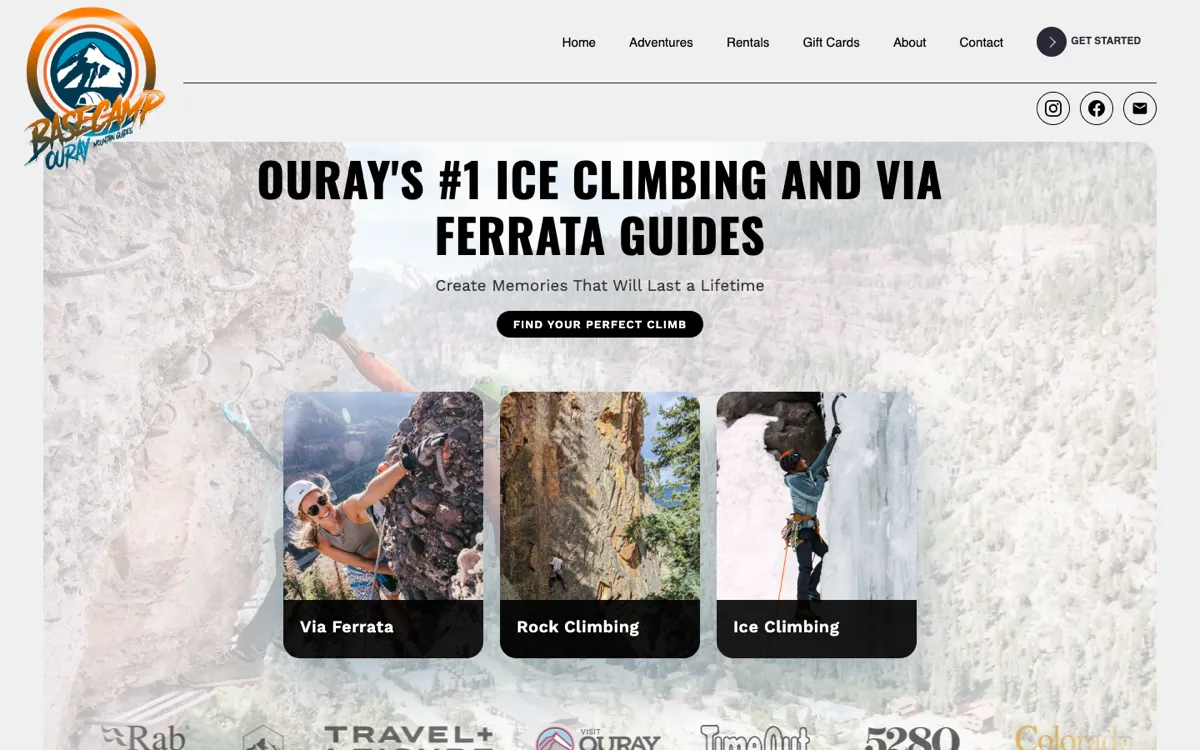
Basecamp Ouray homepage on a desktop: headline about Ouray ice climbing and via ferrata guides over a cliff photo
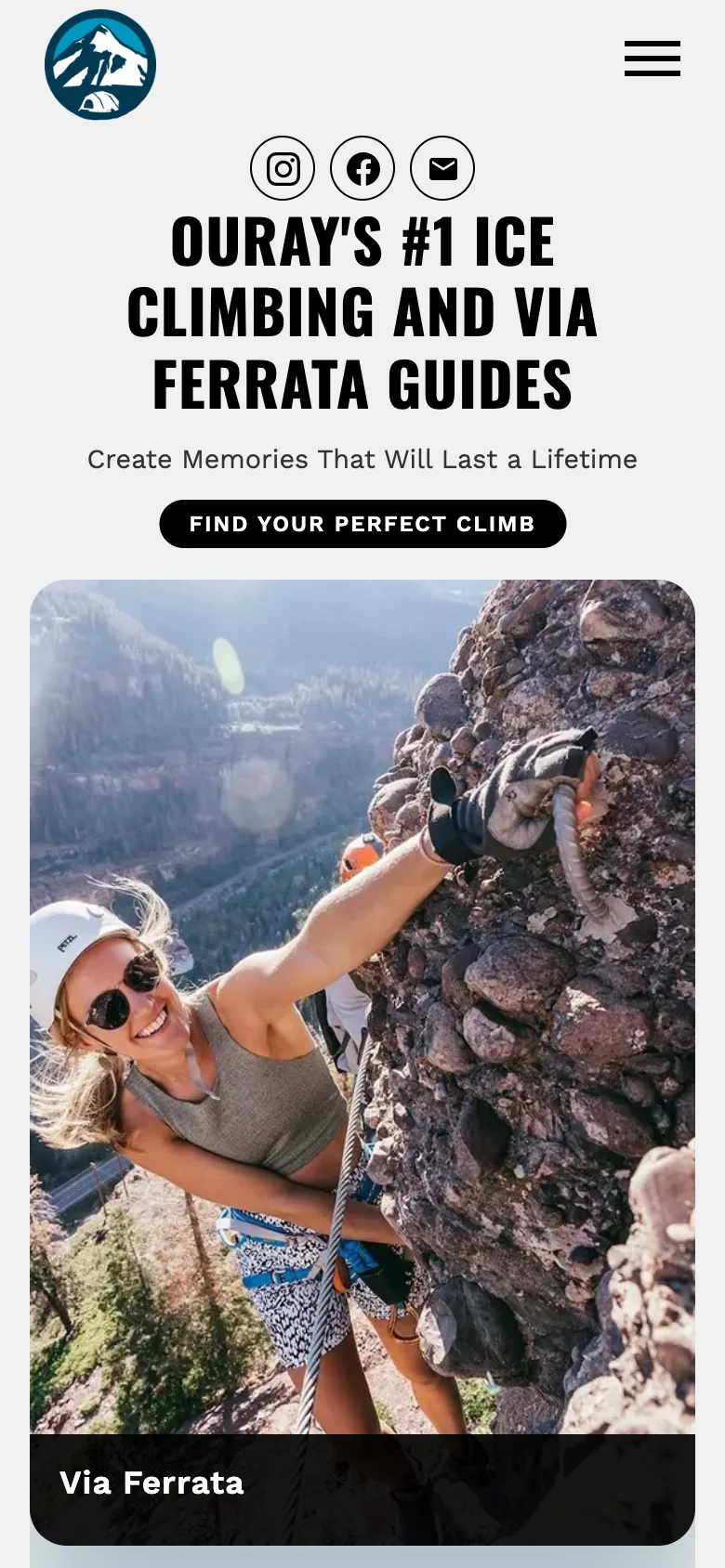
The same Basecamp Ouray homepage on a phone, with a smiling climber on a via ferrata

Guided climbing · Ouray, Colorado

Basecamp Ouray

Needed its 540+ five-star Google reviews to do the convincing before anyone picked up the phone.

Before
The reviews and the press coverage were real, and the old site led with neither. Bookings came in by phone.
We built
A site arranged around the four steps a first-time climber takes, from picking a trip to the climb itself. The reviews sit near the booking button, and booking fits on one screen.
pages
12
out of 100 on Google's speed test on a phone
99
Lighthouse Neurofeedback homepage on a desktop: slate-teal page, appointment button, father and child photo
The same Lighthouse Neurofeedback homepage on a phone, with an orange Request an Appointment button

Therapy practice · Longmont, Colorado

Lighthouse Neurofeedback & Behavioral Health

Needed families who found one of its services to learn about the rest.

Before
One practice, two competing websites: behavior therapy on one, neurofeedback on the other. A family who landed on either never learned the practice offered both.
We built
One site with two front doors, one for adults and one for children, each leading into all four services. Session prices are published right on it.
pages
14
out of 100 on Google's speed test on a phone
98
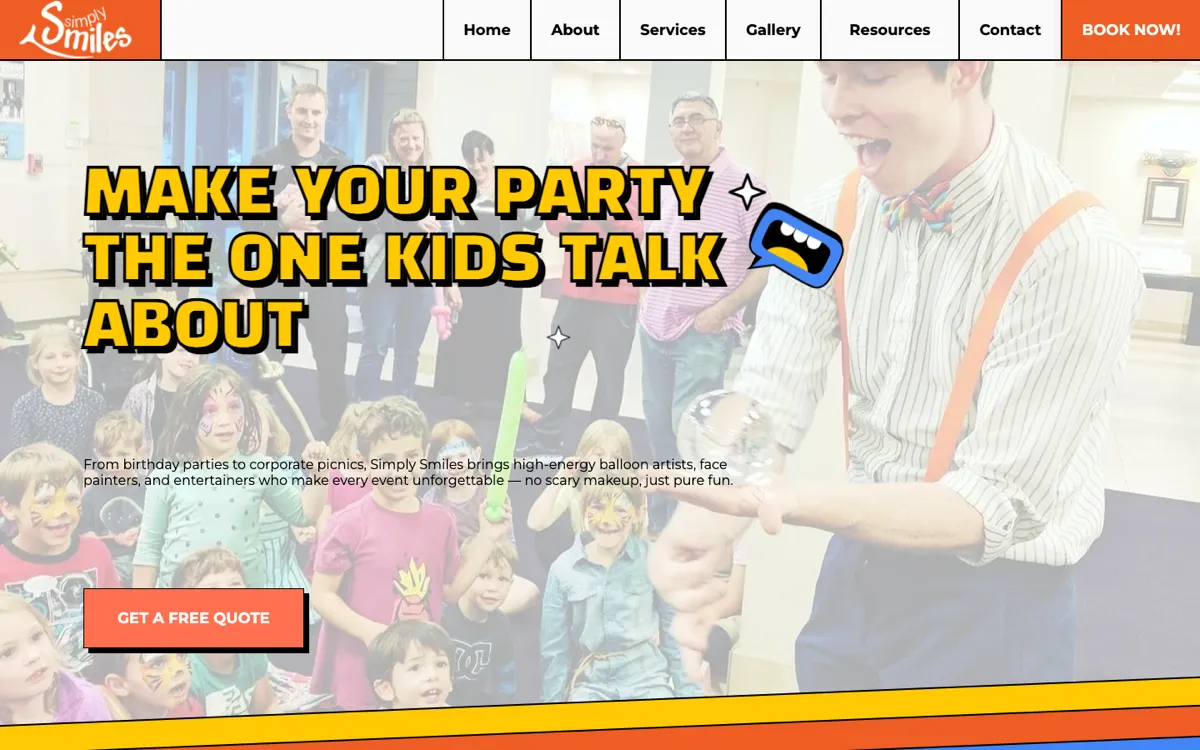
Simply Smiles homepage on a desktop: bold yellow headline over a photo of kids watching an entertainer
The same Simply Smiles homepage on a phone, with an orange and yellow header

Party entertainment · Denver area, Colorado

Simply Smiles

Needed parents who are uneasy about clowns to stay long enough to see what it really offers.

Before
Plenty of parents are wary of clowns, and they were leaving before they found out what the business actually does.
We built
A site that introduces a team of professional entertainers, balloon artists and face painters among them. A party-entertainer booking system is built into the site, so families can book and pay by themselves.
pages
10

Your business is not a climbing guide, a clinic or a party act, and what your site needs won't match any of these exactly. Bring it to the 30-minute call: tell us where customers slip away now, and we'll tell you what we'd build to keep them.

See more of our work

What you're left looking after

Built in Astro, so it stays fast without anyone tending it

Most small-business websites run on WordPress or a one-size-fits-all builder, and both hand the owner a job that never ends. We build in Astro instead. Every page is built ahead of time and sent out finished, so a customer's phone has almost nothing left to work out before it shows your page. It opens fast, and there's nothing in it for anyone to patch.

WordPress and builder upkeep

Off your to-do list

  • Update the plugins
  • Patch the theme
  • Deal with a security warning
  • Work out why the site got slower this year

A site we build hands you none of it, this year or five years from now.

Your part

What you and your staff still change

Text, prices, hours and photos. Whoever on your staff looks after it opens a panel where every field is labelled for what it holds, makes the change and saves. That change then shows on your site, and nobody has to phone us first.

A real site · Ouray, Colorado Cahoots Tavern used to run on Squarespace. Its new site, built in Astro, scores 99 out of 100 on Google's speed test on a phone. Pull up the tavern's site on your phone and time it yourself. The full story of Cahoots Tavern cahootstavernouray.com (opens in a new tab)

Who's on your project

Who builds it, and who you talk to

Bullfinch is two people. One of us designs and builds every site; the other runs every project and account. From your first call until the site is live, we're the only two you deal with, so you know exactly who is working on your business before any money changes hands.

Kyle Rutten at a wooden table behind an open laptop, looking straight at the camera

Plans it, then builds it

Kyle Rutten

Kyle was building websites as a teenager and never found a reason to stop. He works out how each of your pages should lead a visitor to call, book or come in, then writes the code himself. The person who designs your site is the person who builds it.

Katie Rutten at a white table behind an open laptop, with a slight smile

Keeps your project on schedule

Katie Rutten

Katie sets the dates, sends you your pages to look over at each round, and keeps track of every change you ask for until it's made. She does the same for thirty-plus active clients, so a question from you goes to someone who already knows where your project stands.

Nobody relays your messages, and no team you haven't met takes over once you've signed.

30 minutes on Google Meet, talking to us directly

Provo web design, priced and timed

Price, timeline, and what you own

You shouldn't have to book a call just to find out whether a new site fits your budget, or how long you'd wait for it. So here are both answers, taken from real projects.

What it costs

$5,000 to $40,000

That's the span most of our sites fall in. Two things decide where yours sits in it:

  • How many pages it needs Each service you sell and each town you serve gets a page of its own, so a contractor working Orem, Lehi and Springville needs more of them than a shop with one location and two services.
  • What it has to connect to Letting customers book online or pay on the site means more to build than a site that lists your number.

After the call

We put the whole job on paper: every page and feature in the scope, and the one price that covers it. You'll have it inside a week. Nothing is billed by the hour, so there's no clock ticking up while we work.

How long it takes

Three real projects, counted in days:

A site with more pages, or with booking and payments to wire in, takes longer than these. Your part along the way is small: a few calls, and looking over your pages before they go live.

What you own

The domain, the site and every page on it belong to your business. We build it; you keep it.

What's still in the way

Questions owners around Provo ask before they book

You've seen what it costs and how long it takes. These are the doubts that tend to remain after that, each answered in a few lines.

Something else on your mind?

Cheaper Provo web design is everywhere around here. Why would I pay $5,000 or more?

Because the money goes into the two things that make a site earn, not into making it look new. Part of it builds a page for every service you sell and every town you work in, so people searching from Lehi to Springville find you. The rest goes into how each page is laid out and worded, so more of the people who land on it call or book. A site can look brand new and do neither, and then it loses you customers whatever it cost to build.

You're not here in Provo. How does it work when we never sit in the same room?

We're not in Provo, and the project is set up so that never slows you down. Every conversation happens on Google Meet, so you see who you're talking to. Each round of your pages arrives as a preview link: open it on your phone, show it to your staff, and tell us what to change. And the scope and the price are written down before any work starts, so nothing rests on a handshake.

We paid for a new site once and the phone rang no more than before. Why would this one be different?

A site built only to look good has nothing pulling people in. Ours start from what people in each of your towns search for, and from what they need to see before they pick up the phone; the design is shaped around both. From launch day, Google Search Console and call and form tracking show you what comes in, so you judge the site on real numbers rather than on our word. What we won't do is promise a ranking or a number of calls. If you want that search work kept going month after month, that's our search engine optimization for Provo businesses.

People find us on Google now, and we've got years of reviews. Will switching sites cost us any of that?

Not when the move is done carefully, and that care is part of the job. Before launch, every address your current site uses is matched to its new page, and each one is checked once the new site is live, so Google, and customers following an old bookmark, end up on the right page. 588 of 588: that's how many old addresses were redirected and checked live when Outlaw Industries, which makes turnstiles and access-control gates, moved to a new site.

Your Google reviews belong to your Google Business Profile, not to your website, so changing the site leaves them exactly where they are.

Can someone in my office change our hours or prices, or does every edit go through you?

They can, and nobody has to call us. Hours, prices, page text and photos each have their own labelled field in an admin panel: change the field, save, and that's it.

I've got a business to run. What do you need from me, and when?

  1. First The 30-minute call: what you sell, which towns your customers come from, how they reach you now.
  2. During the build A few calls when we need your answers, and looking over each round of pages from its preview link.
  3. Before launch One last look at every page, and your go-ahead.

The rest is on us. For start to finish in days, the three real projects just above are a fair guide; a bigger site takes longer.

Provo web design: the next step

Talk it through in 30 minutes

The calendar books you onto Google Meet with Kyle, the person who would design and build your site. You talk to the people making it, never an account manager or a salesperson. Pick a day and a time and you're set.

You bring
Your current website's address, and the work you want it to win: which jobs, from which towns.
We cover
What you sell, who hires you now, how they find you, and what a new site would take.
Within a week
Your quote, on paper and fixed, to read in your own time. You decide from there.

Waiting doesn't pause anything. This month's searches from Orem, Lehi and Spanish Fork still happen, and they land with whichever business built a page for those towns.

5.0 on Google

Loading availability