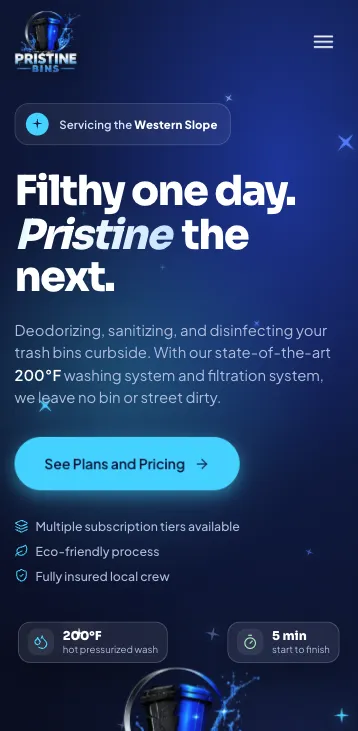
Five mountain towns. Several subscription tiers. One site that keeps things clean.
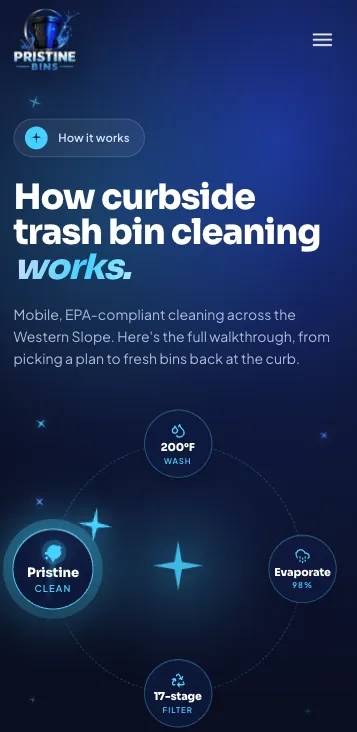
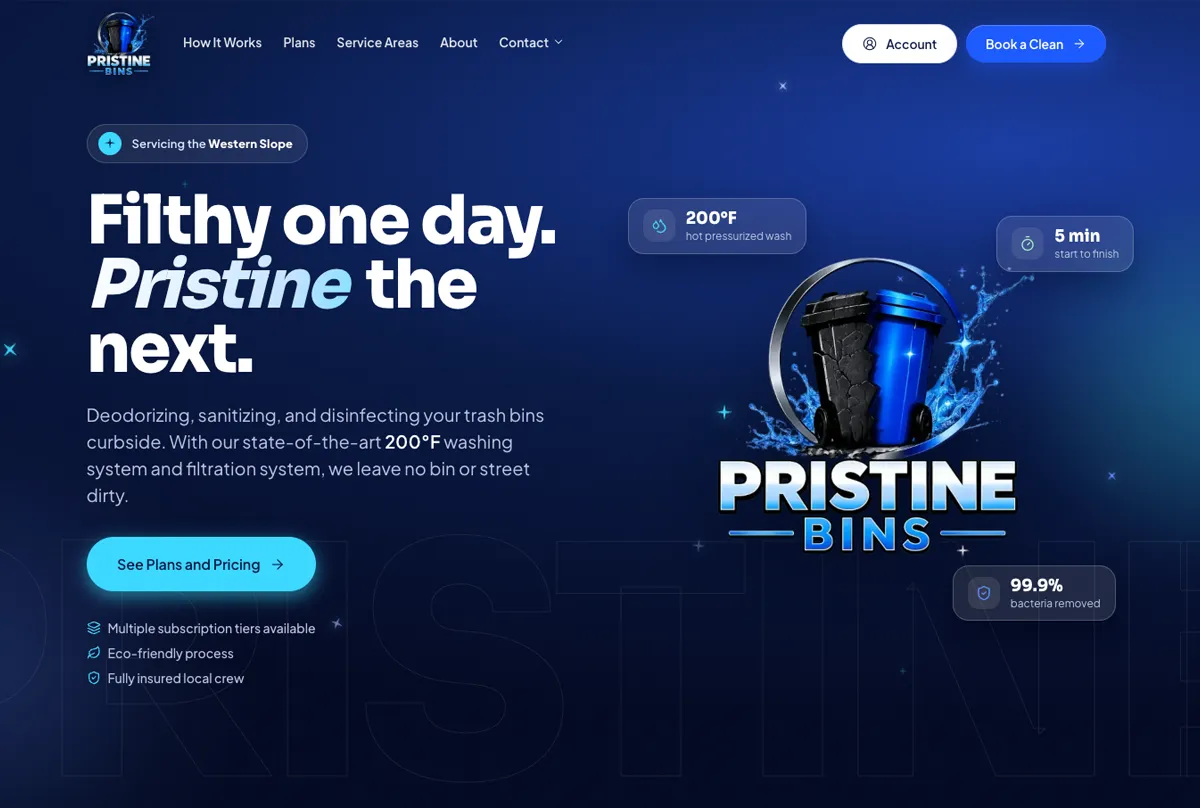
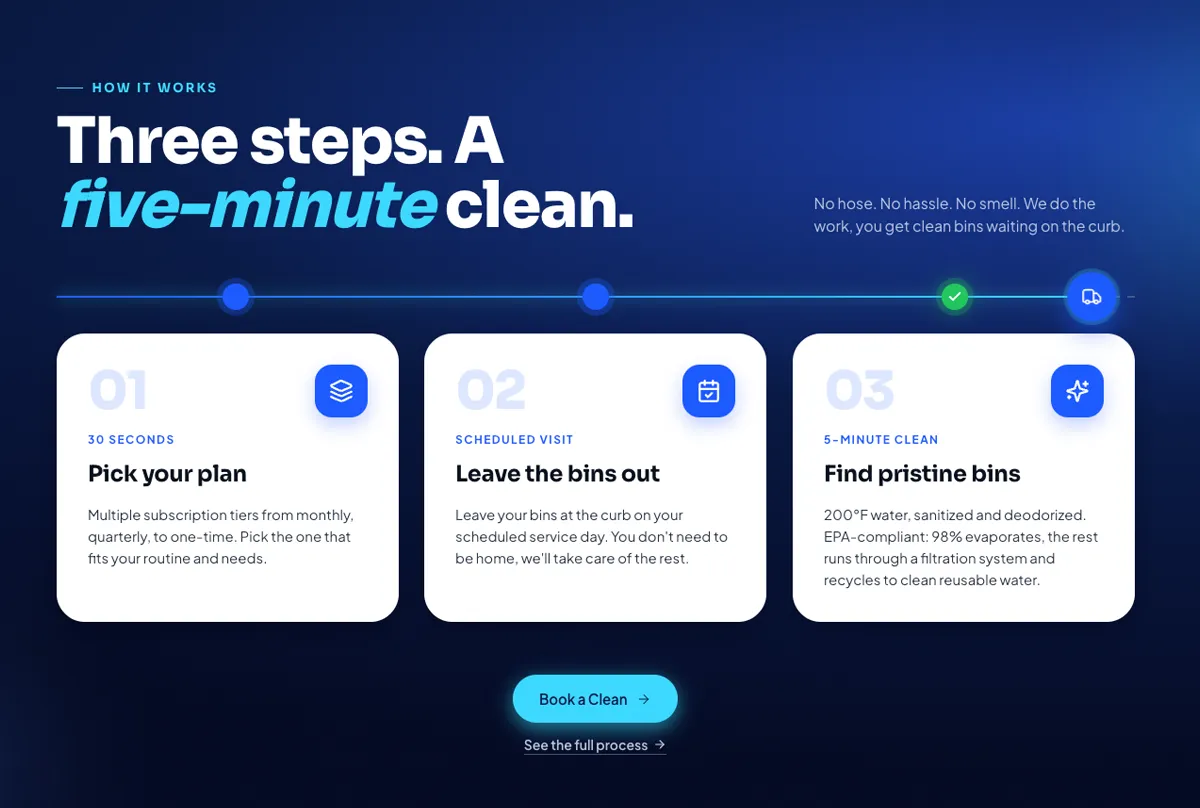
Pristine Bins is a family-run, mountain-town bin cleaning service launching across Colorado's Western Slope. Their equipment is genuinely impressive (a fully self-contained EPA-compliant trailer with 200°F water and a 17-stage filtration system), but their pricing, service tiers, and even whether they service you at all depend entirely on your ZIP. Selling that on a static website meant every visitor had to hit the same generic pitch and figure out where they stood on their own.
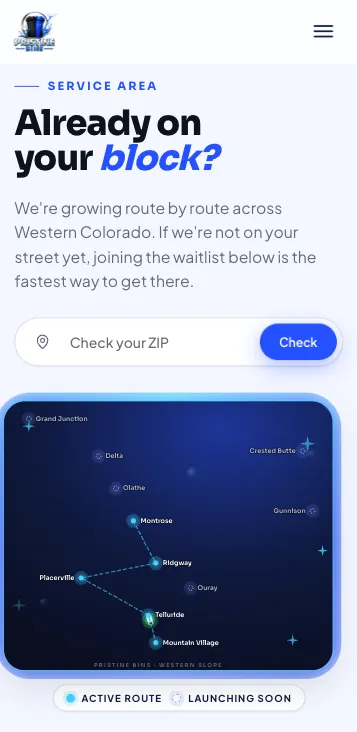
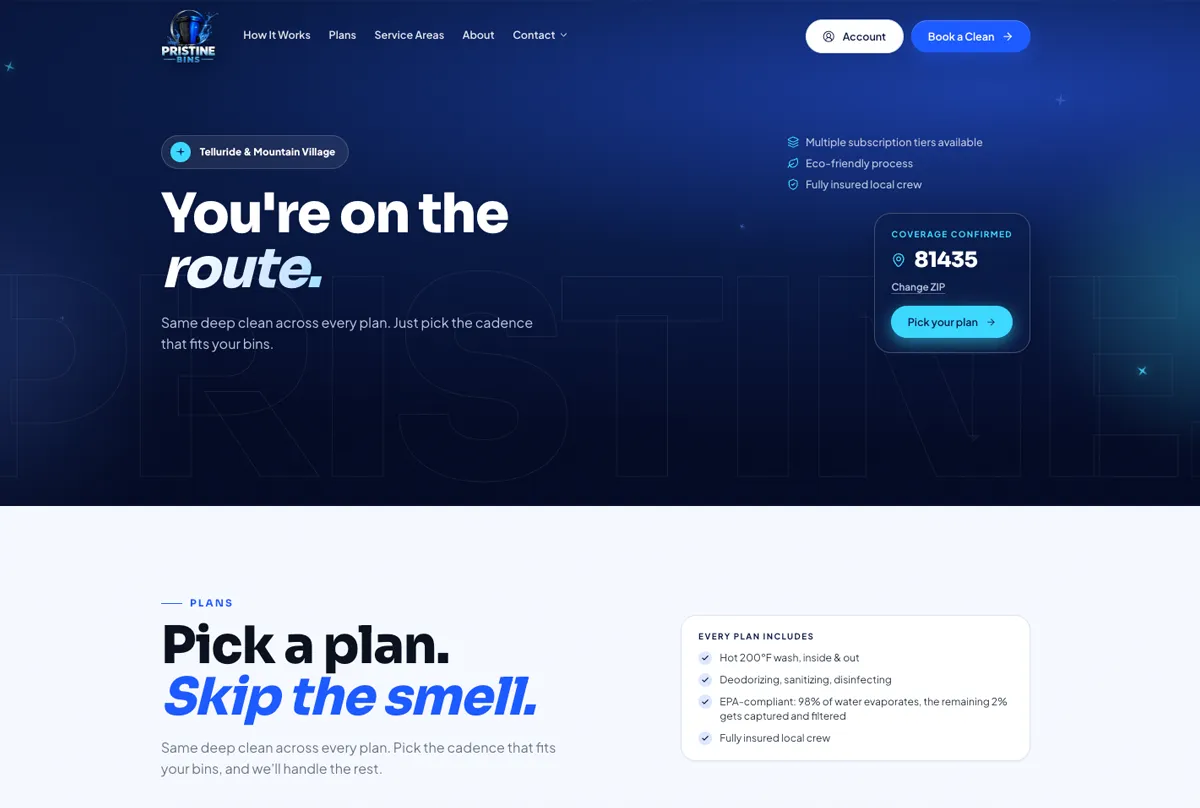
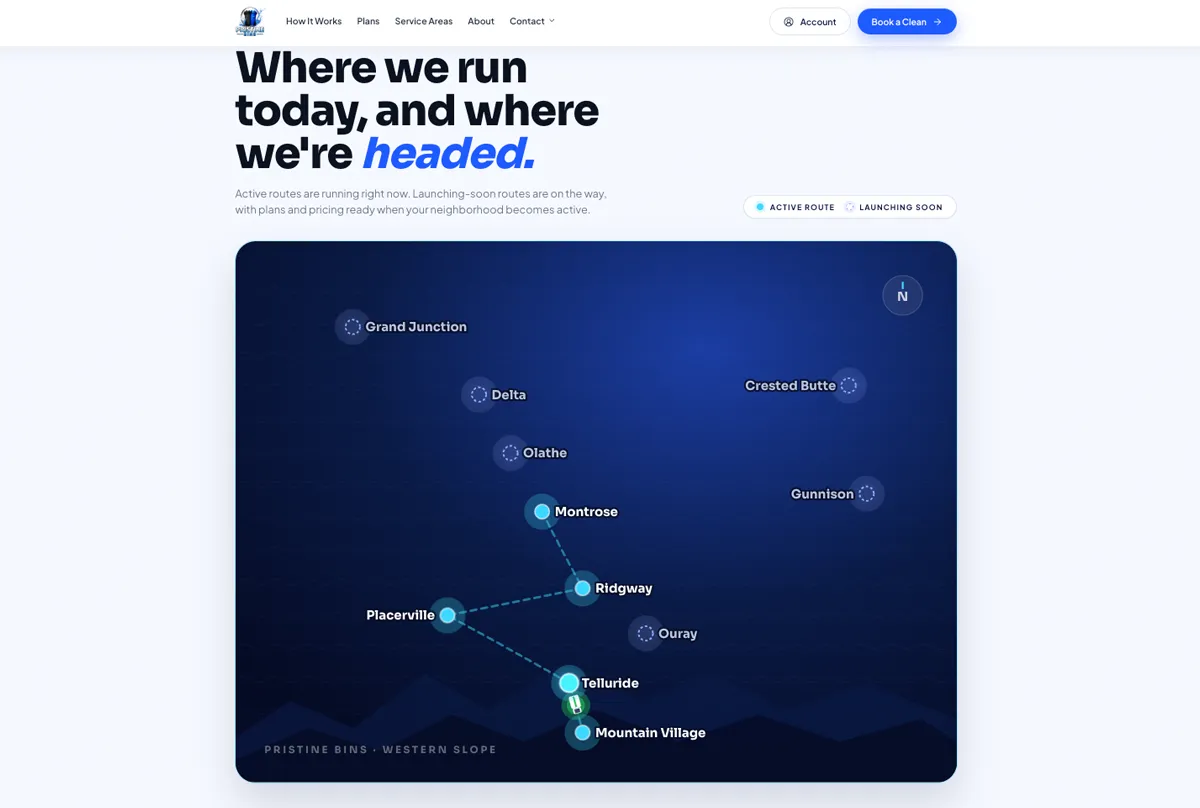
A custom Astro site with a shared service-area config that drives every ZIP checker, plan set, price card, service area map, and waitlist prompt across the site. Enter a Telluride ZIP and you see both the Standard Subscription and the premium Pristine Subscription (a white-glove, garage-to-garage tier only offered up there). Enter Montrose and you see the standard three-tier plan set. Enter Denver and you get a clean out-of-area message and are prompted to join their waiting list. One config, one truth, every component in sync. It is the site we walk through, screen by screen, on our page about home service website design.
Every visitor lands on a page that already knows their area, their pricing, and their plan options without a single form to fill out. The launching-soon waitlist captures leads in un-served ZIPs, giving Pristine a real signal on where to expand next. And with the config-driven approach, adding a new service area or updating a price is a single-line change, not a site rebuild.
Built like a system, not a website.
Seven pages. One config. Fifteen plan permutations.
So stoked on what we were able to create. You've made arguably (I'm biased, but) the best website I've ever seen. Thank you Katie and Kyle, it means a lot to us all!
Built as a system, not a homepage with extras.
We built the service area config first, before drawing anything.
Eleven towns. Several subscription tiers. Five cadences. Per-area pricing with different bin-count models depending on the product. We locked all of that into a single shared config file first, then designed every page to read from it. Every plan card, ZIP checker, price display, and map marker on the site pulls from that one file.
One component library, seven pages, no duplication.
Built every page from a tight Astro component system; hero patterns, plan cards, ZIP checkers, waitlist prompts, FAQ accordions, all from the same kit. Adding a new service area, changing a price, or launching a "coming soon" route is a single-line config change, not a site edit.
ZIP-gated everything. No generic pages.
The plans page rewrites itself based on the visitor's ZIP. Telluride sees the premium Pristine Subscription plus Standard. Placerville sees three cadences at premium pricing. Grand Junction sees the "launching soon" state with plans visible but a waitlist to sign up. Nobody sees a plan they can't buy or a price that doesn't apply to them.
Half their leads come from a phone on the curb with a quick QR code scan.